HSCAM NANO — Vision System on Chip
Prototype — evaluation phaseHSCAM NANO
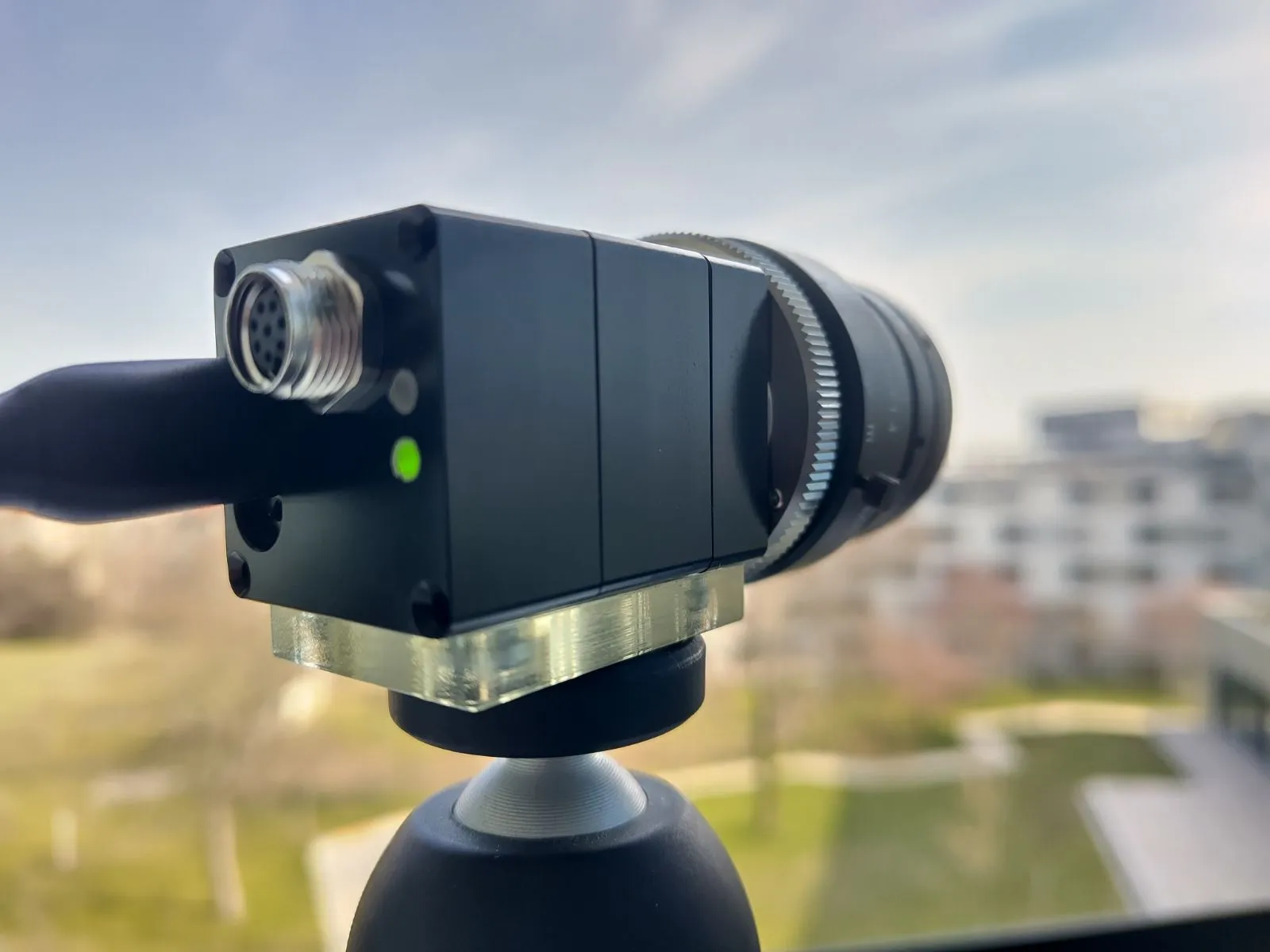
A Vision System on Chip (VSoC) camera that acquires and processes images directly on the sensor — built on chip technology invented by Fraunhofer IIS. Currently in prototyping and evaluation.
- Processing frequency
- 13 kHz full-frame
- Resolution
- 2 × 1,008 × 1,008 px
- On-chip latency
- < 1 ms
- Power consumption
- ~1 W total
Where this stands today
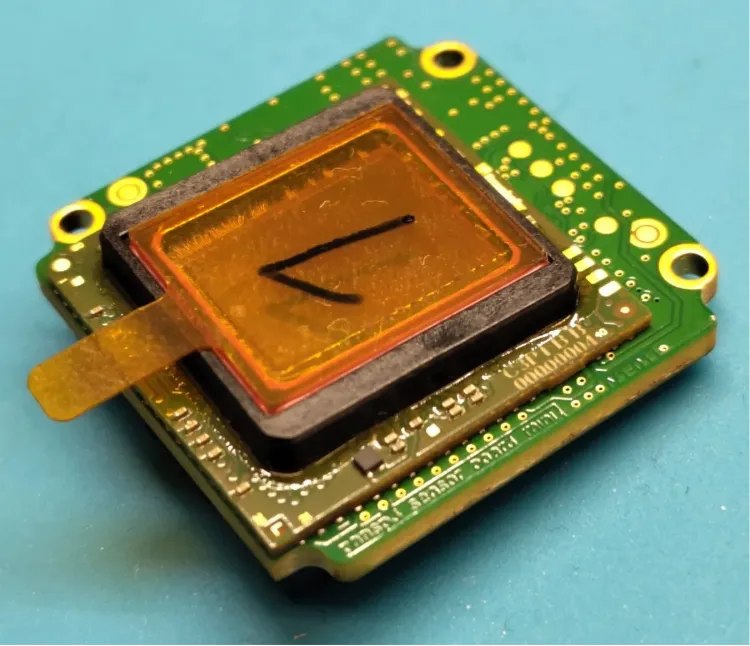
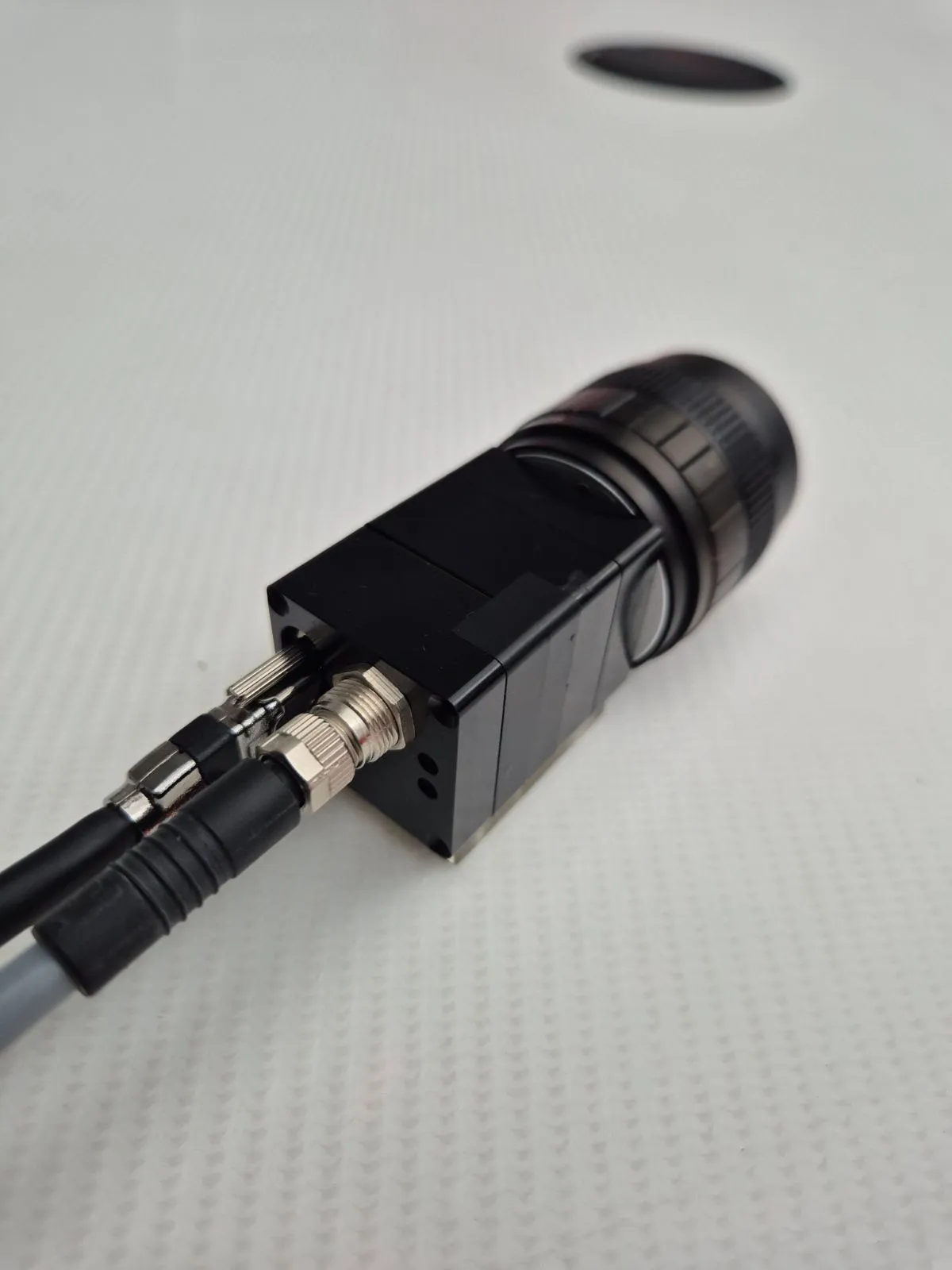
HSCAM NANO is not yet a shipping, orderable product. The photography on this page shows real prototype and chip-level hardware, not a finished production unit.
On-sensor processing
The World’s Smallest High Speed Camera
Acquires and processes image data as fast as a high-speed camera, but will not output the data as fast.
The underlying VSoC chip technology was invented by Fraunhofer IIS. HSCAM designs the camera and system around it.
Capabilities
What runs on the chip
On-sensor processing
3 independent ASIPs (SIMD, LCTRL, GLB) govern acquisition, analog processing and system comms directly on-chip.
Edge AI
Integrated microcontroller and NPU run neural-network inference on-chip, with no host required.
Minimal-bandwidth output
The camera can output object coordinates only, instead of full frames.
Dynamic ROI
Region of interest is selectable on-chip.
Image-based triggering
Triggering can be derived directly from image content on-chip.
Application example — lab test setup
3D scanning via laser light-section
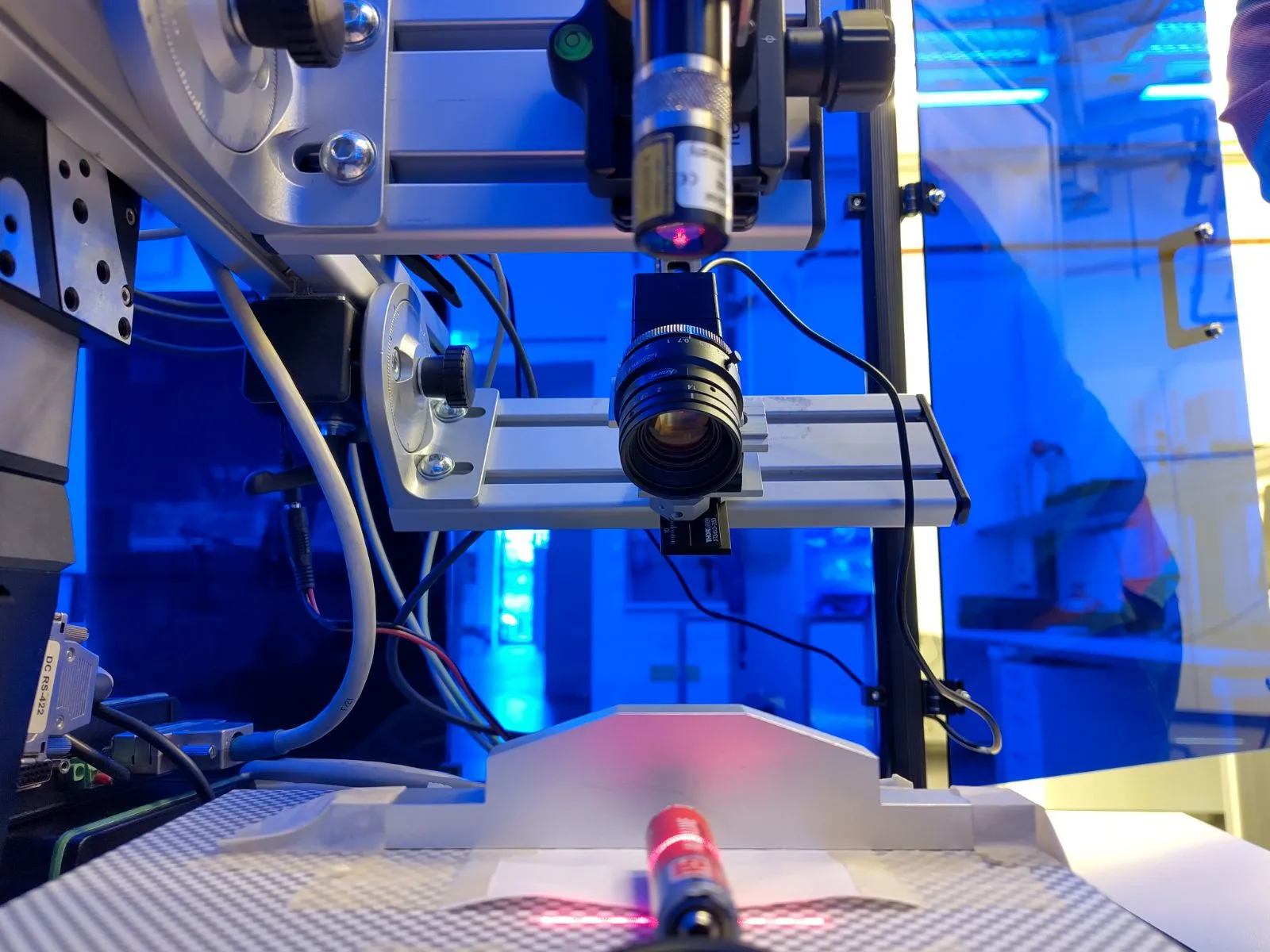
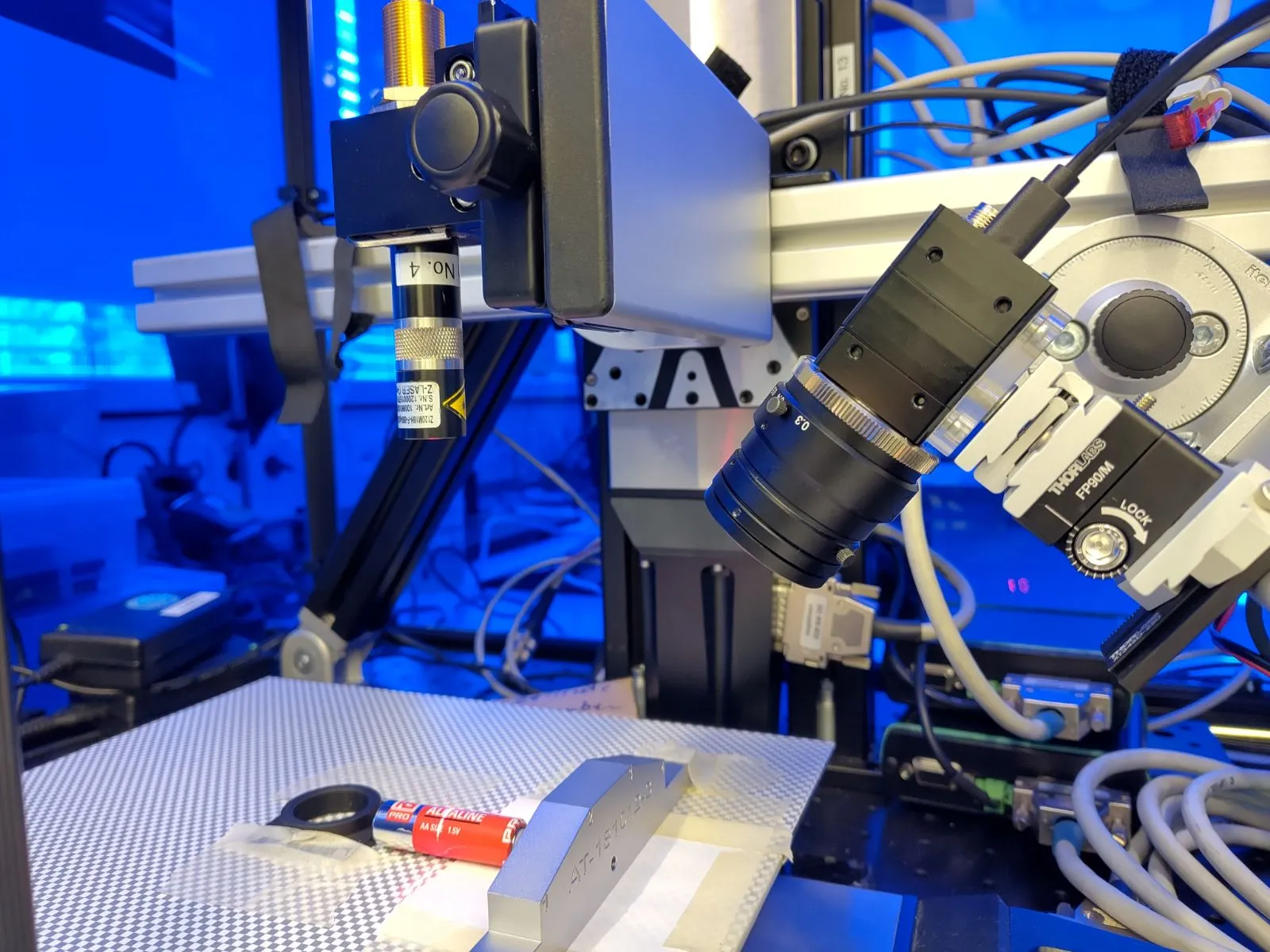
In this bench setup, a line laser projects a straight line across the object; a NANO prototype, mounted on the optical rail above it, captures how that line deforms across the surface. On-chip processing can turn that deformation directly into a height profile — a classic laser-triangulation (light-section) approach to 3D scanning, tested here at prototype stage.
This is HSCAM’s own lab rig, illustrating a candidate use of the technology at prototype stage — no scan result or product claim is made here.
Output
Coordinates and events, not necessarily full frames
NANO can report just what changed, at rates well beyond what a full frame stream would allow over a simple link.
| Field | Description | Rate |
|---|---|---|
| Object X, Y | Center-of-gravity coordinates | 10 kHz |
| Object size | Bounding box dimensions | 10 kHz |
| Detection flag | Object present / absent | 10 kHz |
| ROI trigger | Region-of-interest events | Event-based |
The sensor's stated processing frequency is 13 kHz; the output rate above is 10 kHz. That difference is present in the source material and unresolved — it is not explained further there.
Interfaces
- UART — serial coordinate stream, compatible with Arduino / STM32 / ESP32, no drivers required
- USB — full configuration access and image streaming, with Python & C++ APIs (Windows/Linux)
- On-chip — LVDS, SPI, JTAG, 16× GPIO
Specifications
Full specifications
All figures are chip-level, from HSCAM's NANO technology overview.
| Specification | Value |
|---|---|
| Processing frequency | 13 kHz full-frame |
| Resolution | 2 × 1,008 × 1,008 px |
| On-chip latency | < 1 ms |
| Power consumption | ~1 W total |
| Sensor technology | 180 nm CIS (monolithic) |
| Chip size | 11 × 13 mm (143 mm²) |
| Pixel size | 8.75 × 8.75 µm |
| Processing power | 117 GOps @ 60 MHz |
| PE architecture | 1,024 × 8-bit SIMD processing elements |
| Dynamic range | 59.9 dB |
| On-chip memory | 128 kB DRAM |
| Digital interfaces | LVDS (500 MHz DDR), SPI, JTAG, 16× GPIO |
Related
Elsewhere on the site
Interested in HSCAM NANO?
NANO is in prototyping and evaluation. Tell us your application and we'll follow up as it moves toward availability.
HSCAM GmbH · Angerstraße 40–42, Haus B · 04177 Leipzig, Germanycontact@hscam.com · www.hscam.com